“And I saw the dead, small and great, stand before God; and the books were opened: and another book was opened, which is the book of life: and the dead were judged out of those things which were written in the books, according to their works.” Revelation 20:12 (KJV)
ABSTRACT
Heaven’s all-seeing radar scans every heart with perfect omniscience, calling us to total surrender, character transformation through Christ’s imparted righteousness, and faithful witness to our neighbor before the investigative judgment closes and eternity is decided.
RADAR OF HEAVEN SCANS EVERY HEART
The eternal God whose nature is love does not observe His creation from a cold and impassive distance. He searches every soul with a penetrating awareness that no veil of hypocrisy and no depth of secrecy can interrupt or deceive. Ellen G. White declared in The Great Controversy, page 488, “Every individual has a soul to save or to lose.” This declaration is not a casual remark. It is the theological axis upon which the entire framework of the investigative judgment revolves. The omniscience of God is not a dormant attribute that awakens only at the close of probation. It is active, perpetual, and searching at every moment of every life. The prophet David gave voice to this truth when he wrote, “O LORD, thou hast searched me, and known me. Thou knowest my downsitting and mine uprising, thou understandest my thought afar off” (Psalm 139:1-2). This verse does not describe a God who merely accumulates facts about His creatures. It describes a God who inhabits the very architecture of their inner world, knowing the posture of the body and the motion of the will, knowing the thought before it crystallizes into decision and the desire before it rises to consciousness. Ellen G. White reinforced this understanding when she wrote in The Ministry of Healing, page 422, “God is love. Like rays of light from the sun, pity, love, and tenderness flow out from Him to all His creatures.” The omniscience of God is therefore inseparable from His character of love. He does not search the heart as an adversarial auditor seeking cause for condemnation. He searches it as a Father whose deepest desire is to find within each soul the conditions that make salvation possible. Yet the reality of that search demands full accountability. The writer of Hebrews gave this accountability its starkest expression: “Neither is there any creature that is not manifest in his sight: but all things are naked and opened unto the eyes of him with whom we have to do” (Hebrews 4:13). The Greek word rendered “opened” carries the image of a throat laid bare — a picture of complete and inescapable exposure before the One who holds all life in His hands. Ellen G. White confirmed this exposure in Testimonies for the Church, volume five, page 222: “The work of preparation is an individual work. We are not saved in groups.” Every soul must ultimately stand alone before the penetrating gaze of divine omniscience. No community membership, no family heritage, and no denominational credential can substitute for the personal transformation that God’s searching eye alone can verify. The omniscient record of heaven captures not merely the outward act but the inner spring from which the act flows. Proverbs 15:3 declares, “The eyes of the LORD are in every place, beholding the evil and the good.” This dual beholding — evil and good — reveals that the divine omniscience does not edit its register in favor of appearance. It captures reality in its full dimension. Ellen G. White confirmed the scope and fidelity of this heavenly registry when she wrote in The Great Controversy, page 482, “Every man’s work passes in review before God and is registered for faithfulness or unfaithfulness.” The heavenly record is not a mechanical ledger indifferent to motive. It is a living archive that preserves not only the action but the intention, not only the word but the spirit that animated it. Jeremiah 17:10 gives the divine voice to this comprehensive inquiry: “I the LORD search the heart, I try the reins, even to give every man according to his ways, and according to the fruit of his doings.” The word “reins” in the ancient Hebrew imagination refers to the deepest motivational center of the human being — the seat of desire, of intention, and of moral loyalty. To search the reins is to go beyond conduct to the very source of conduct. Ellen G. White situated this searching within the grand narrative of redemption when she wrote in Patriarchs and Prophets, page 49, “So long as created beings acknowledged the allegiance of love, there was perfect harmony throughout the universe of God.” The disruption of that harmony by sin is precisely what made the investigative judgment necessary. God’s omniscience now operates as the instrument by which that perfect harmony will be restored. The book of Revelation gives the apex of this restorative process its clearest voice: “I am he which searcheth the reins and hearts: and I will give unto every one of you according to your works” (Revelation 2:23). This is the voice of Christ Himself — not only the loving Savior but the righteous Judge — speaking within the context of the seven churches and announcing His penetrating knowledge of every motive, every compromise, and every act of faithfulness. The investigative judgment is not a correction of an incomplete divine awareness. It is the formal, public, and final demonstration of what God has always known. And as 2 Chronicles 16:9 declares, “For the eyes of the LORD run to and fro throughout the whole earth, to shew himself strong in the behalf of them whose heart is perfect toward him.” The omniscience of God is not only His instrument of judgment. It is His instrument of protection, of sustaining grace, and of ultimate vindication for every soul whose heart has been wholly consecrated to His transforming power. The people of God in these last days are called to live under this searching gaze not with terror but with transparency — presenting to the divine Examiner a life that, though imperfect in human estimation, is clothed in the righteousness of Christ and shaped by an unbroken cooperation with the Holy Spirit. Ellen G. White anchored this calling when she wrote in The Great Controversy, page 488, “The subject of the sanctuary and the investigative judgment should be clearly understood by the people of God.” This understanding is not optional theological enrichment. It is the present-truth foundation upon which every other doctrine of the remnant church must rest, and upon which every soul must build the character that will endure the scrutiny of the heavenly record before the close of all things.
DOES HEAVEN’S EYE MISS NOTHING?
Heaven’s watching eye is not confined to moments of worship or seasons of formal devotion. It operates without interruption across every landscape of human experience — in the privacy of the chamber, in the crowd of the marketplace, in the secret movements of the will that no other eye can follow. Ellen G. White described the active ministry of the heavenly sanctuary in The Great Controversy, page 479: “Attended by heavenly angels, our great High Priest enters the holy of holies and there appears in the presence of God to engage in the last acts of His ministration in behalf of man.” The sanctuary in heaven is not a passive archive. It is a living throne room where Christ ministers actively on behalf of every soul whose case comes before the divine court of review. The omniscient eye of heaven is inseparable from this ministerial reality. It watches not to condemn but to intercede, not to record sin without remedy but to apply, where it is accepted, the atoning blood that makes the record clean. Psalm 33:13-14 gives this watching a majestic scope: “The LORD looketh from heaven; he beholdeth all the sons of men. From the place of his habitation he looketh upon all the inhabitants of the earth.” The phrase “from the place of his habitation” locates the divine gaze precisely — it proceeds from the sanctuary, from the Most Holy Place where the ark of the covenant and the mercy seat establish the legal and redemptive center of the universe. Ellen G. White pressed the urgency of this heavenly activity when she declared in The Great Controversy, page 483, “As the books of record are opened in the judgment, the lives of all who have believed on Jesus come in review before God.” Every name inscribed in the book of life will pass before the Father and the Son. Every evidence of repentance, of faith, of surrender, and of character development will be examined. Every instance of spiritual negligence and deliberate transgression will also stand in the record. The searching eye of heaven misses nothing. Hebrews 9:24 grounds the reality of this heavenly ministry in the typology of the earthly sanctuary: “For Christ is not entered into the holy places made with hands, which are the figures of the true; but into heaven itself, now to appear in the presence of God for us.” The word “now” carries enormous weight. The intercession of Christ in the heavenly sanctuary is a present reality, not a future hope. It is happening now, in this generation, in this hour, on behalf of souls who are living through the most solemn period in the history of redemption. Ellen G. White gave this solemnity its sharpest edge in The Great Controversy, page 489: “We are now living in the great day of atonement.” The typical Day of Atonement in ancient Israel was the one day in the year when every soul was required to search itself with the most rigorous self-examination. Every member of the congregation was to afflict the soul, to put aside every distraction, and to stand before God in complete transparency. The antitype is not less demanding. It is more so. Ellen G. White elaborated on the character of the heavenly search when she wrote in The Great Controversy, page 467, “God’s law reaches the feelings and motives, as well as the outward acts. It reveals the secrets of the heart, bringing them to light before Him with whom we have to do.” No emotion, no motivation, and no secret inclination is beyond the reach of the divine standard. The moral law operates as an X-ray that passes through the surface of behavior and illuminates the deepest formation of character. Romans 14:12 reminds every soul of the personal scope of this accountability: “So then every one of us shall give account of himself to God.” The pronoun “himself” is emphatic. There is no proxy accountability, no borrowed righteousness of lineage or association that can satisfy the divine examination. Every soul stands alone in the hour of review, clothed either in the righteousness of Christ or in the rags of self-sufficiency. Ellen G. White extended this searching to the future close of all intercession in The Great Controversy, page 425: “Those who are living upon the earth when the intercession of Christ shall cease in the sanctuary above are to stand in the sight of a holy God without a mediator.” This sentence carries the full weight of last-day eschatology. The day is approaching when the heavenly sanctuary will complete its work of adjudication and Christ will move from intercession to execution, from pleading to pronouncing. The souls who will stand in that hour without a mediator must have already become, through the transforming work of grace, the embodiment of the very character that the investigative judgment has been verifying. Ellen G. White assured the people of God that this transformation is not the product of unaided human effort: “There is no excuse for sinning. A divine influence awaits all who seek for it with sincerity” (Testimonies for the Church, volume eight, page 62). Heaven’s eye watches not only for compliance but for connection — the living union between the soul and the Source of all righteousness that makes genuine transformation possible. Revelation 3:5 seals this connection with a promise of eternal security: “He that overcometh, the same shall be clothed in white raiment; and I will not blot out his name out of the book of life, but I will confess his name before my Father, and before his angels.” The white raiment is the righteousness of Christ. The overcoming is the daily, Spirit-empowered process by which the soul collaborates with divine grace to produce a character that the searching eye of heaven can confirm as genuine. The big radar of divine omniscience sweeps every quarter of the human soul without rest. It is the most comprehensive surveillance system ever conceived. And it operates not from a throne of tyranny but from a throne of grace — ever seeking, ever finding, ever interceding for every soul willing to be found.
FATHER AND SON SHARE ONE MIND?
The omniscience that undergirds the investigative judgment is not the attribute of a solitary divine Being acting in isolation. It is the shared and mutually transparent knowledge of the Godhead — Father, Son, and Holy Spirit — whose communion of mind and purpose has never been broken and whose coordinated action on behalf of fallen humanity represents the most extraordinary expression of unified divine intelligence in the history of the universe. Ellen G. White illuminated this divine cooperation when she wrote in Manuscript Releases, volume one, page 50, “The Saviour of the world co-operated with His Father. He came to our world to be the Restorer, to heal the moral image of God in man.” The work of restoration is not the project of one member of the Godhead while the others wait in passive observation. It is the shared mission of a Trinity whose knowledge of every soul is equally complete, equally compassionate, and equally searching. The Father sees the record. The Son intercedes for the sinner. The Holy Spirit presses the claims of grace upon the yielding heart. John 10:15 reveals the depth of this shared knowledge: “As the Father knoweth me, even so know I the Father: and I lay down my life for the sheep.” The mutual knowledge between Father and Son is the standard of intimacy. It is total, transparent, and unobstructed. And it is precisely this quality of knowing that the Son brings to His work in the investigative judgment — an omniscient identification with every soul whose name comes before the bar of heaven. Ellen G. White described the necessary inward dimension of this divine knowing in Steps to Christ, page 18: “There is need of a power working from within, a new life from above, before men can be changed from sin to holiness. That power is Christ.” The omniscience of the Godhead does not stop at external observation. It seeks entry into the inner life of the believer, where the Son Himself becomes the transforming presence that changes the character from the inside. This is not a transactional arrangement. It is an ontological union — the divine life inhabiting the human soul and producing, from within, the holiness that no external pressure can manufacture. 1 Corinthians 2:10-11 gives the Holy Spirit’s dimension of this omniscience its doctrinal foundation: “But God hath revealed them unto us by his Spirit: for the Spirit searcheth all things, yea, the deep things of God. For what man knoweth the things of a man, save the spirit of man which is in him? even so the things of God knoweth no man, but the Spirit of God.” The Spirit who searches the deep things of God is the same Spirit who searches the deep things of the human heart — applying the divine standard to the inner life and making known to the consciousness of the believer what must be confessed, surrendered, and transformed. Ellen G. White captured the cosmic scope of this divine watching when she wrote in Patriarchs and Prophets, page 68, “The whole universe has been watching with inexpressible interest the developments of the great controversy between good and evil.” The investigative judgment is not only a transaction between God and the individual soul. It is a cosmic event of universal significance. Angels, unfallen intelligences, and the entire created order observe the proceedings of the heavenly court as the final answer to the great controversy is being assembled case by case, name by name, life by life. Ellen G. White gave the Holy Spirit’s role in this grand process its most practical expression in Testimonies for the Church, volume eight, page 62: “A divine influence awaits all who seek for it with sincerity.” The Spirit is the operational presence of divine omniscience within the soul. He does not force entry. He awaits the sincere, persistent request of the yielded believer. Where that request is made, the omniscience of the Godhead becomes not merely an external searchlight but an internal guide — leading the soul into all truth, all holiness, and all conformity to the character of Christ. John 16:13 describes this guiding function with precision: “Howbeit when he, the Spirit of truth, is come, he will guide you into all truth: for he shall not speak of himself; but whatsoever he shall hear, that shall he speak: and he will shew you things to come.” The Spirit of truth is the Spirit of omniscience in its applied form. He brings from the throne of the Father the specific knowledge that each soul needs in each moment of the sanctifying journey. He makes available the wisdom of the eternal Godhead to the finite and struggling human mind. Ellen G. White connected this Spirit-guided process directly to the prophetic record that the investigative judgment examines: “The work of every soul will pass under the scrutiny of God. The question to be decided is, what kind of record has been made?” (Review and Herald, January 11, 1881). The record that the Father and Son examine in the heavenly court is the record that the Holy Spirit has been seeking to shape, day by day, through the transforming cooperation of the believer. The shared omniscience of the Godhead is therefore not only the standard of the judgment. It is also the means of preparation for it. Romans 8:26-27 reveals the Spirit’s advocacy on behalf of the searching soul: “Likewise the Spirit also helpeth our infirmities: for we know not what we should pray for as we ought: but the Spirit itself maketh intercession for us with groanings which cannot be uttered. And he that searcheth the hearts knoweth what is the mind of the Spirit, because he maketh intercession for the saints according to the will of God.” Father, Son, and Spirit are all engaged in the same salvific work. The Father searches the hearts. The Son intercedes at the golden altar of incense. The Spirit makes intercession from within, translating the inarticulate longings of the repentant soul into petitions that align perfectly with the will of God. This is the Trinity of omniscience at work in the economy of redemption. And it is this coordinated divine activity that makes the investigative judgment not a threat to the faithful soul but the most glorious vindication that eternity will ever witness.
TOTAL YIELDING TRANSFORM OUR WILL?
The transformation that passes the examination of the heavenly court is not the product of reformed behavior. It is the product of total yielding — the complete, unconditional surrender of the will to the divine will, which alone opens the channel through which the imputed righteousness of Christ and the imparted righteousness of the Spirit can flow into the soul and produce a character that mirrors the holy standard of the law. Ellen G. White drew this essential distinction with doctrinal precision in the Review and Herald of June 4, 1895: “The righteousness by which we are justified is imputed; the righteousness by which we are sanctified is imparted. The first is our title to heaven, the second is our fitness for heaven.” These are not two separate plans of salvation. They are two inseparable dimensions of a single redemptive reality. The sinner comes to Christ with nothing to offer and receives, as a free gift, the perfect obedience of Christ credited to the account of faith. This is justification. But that same sinner, remaining in union with Christ through the Spirit, becomes the recipient of a transforming righteousness that changes the disposition, reorders the affections, and produces holiness from the inside out. This is sanctification. Both dimensions are necessary. Neither is sufficient alone. Ellen G. White gave this double work of grace its clearest practical expression in Steps to Christ, page 18: “There is need of a power working from within, a new life from above, before men can be changed from sin to holiness. That power is Christ.” The total yielding of the will is the condition upon which this power is released. It is not the cause of salvation. It is the channel of it. Romans 6:13 gives the yielding soul its defining imperative: “Neither yield ye your members as instruments of unrighteousness unto sin: but yield yourselves unto God, as those that are alive from the dead, and your members as instruments of righteousness unto God.” The word “yield” in this verse carries the force of a decisive, once-for-all presentation — a permanent placing of the entire being at the disposal of God. This is not a single crisis event followed by spiritual passivity. It is a moment-by-moment, day-by-day posture of surrender that becomes the settled orientation of the sanctified life. Ellen G. White gave this posture its most searching expression in Christ’s Object Lessons, page 97: “True obedience is the outworking of a principle within. It springs from the love of righteousness, the love of the law of God.” This principle within is the new heart — the heart of flesh that replaces the heart of stone when the covenant promise of Ezekiel 36:26 is fulfilled in the surrendered life. Obedience that does not spring from this interior principle is mere conformity. It is the whitewashed sepulchre — outwardly clean, inwardly dead. The investigative judgment does not credit conformity. It seeks transformation. Ellen G. White addressed the common fear that surrender means loss in Steps to Christ, page 46: “God does not require us to give up anything that it is for our best interest to retain.” Total yielding is not impoverishment. It is the exchange of the inferior for the superior — the trading of self-will, which always leads to misery, for the divine will, which always leads to peace, to purpose, and to eternal inheritance. Galatians 2:20 gives the yielded soul its most lyrical self-portrait: “I am crucified with Christ: nevertheless I live; yet not I, but Christ liveth in me: and the life which I now live in the flesh I live by the faith of the Son of God, who loved me, and gave himself for me.” The death of the old self is not a loss. It is the precondition for the emergence of the new self — the self that is animated by the life of Christ and that therefore carries, woven into every habitual choice and every formed reaction, the character that will endure the searching examination of the heavenly court. Ellen G. White made the social and relational consequences of this internal transformation explicit when she wrote in Testimonies for the Church, volume four, page 358, “The religion of Christ means more than the forgiveness of sin; it means taking away our sins, and filling the vacuum with the graces of the Holy Spirit.” Where sin is merely forgiven without being replaced, a vacuum remains. That vacuum is an invitation for the return of the expelled evil. Total yielding ensures that the emptied chambers of the soul do not remain vacant but are immediately and continuously filled with the graces that constitute the divine character. Matthew 5:6 promises the supply that this filling requires: “Blessed are they which do hunger and thirst after righteousness: for they shall be filled.” The hunger and thirst after righteousness is not a mere emotional longing. It is the active, persistent, and humble seeking of the One who is Righteousness — the Christ whose life becomes the life of the yielded soul and whose perfect character is reproduced in the believer through the ungrieved operation of the Holy Spirit. Ellen G. White illuminated the daily mechanics of this divine exchange when she wrote in Thoughts From the Mount of Blessing, page 20, “The righteousness which Christ taught is conformity of heart and life to the revealed will of God.” This conformity is not arrived at in a single spiritual transaction. It is the cumulative product of ten thousand surrendered moments, ten thousand chosen obediences, and ten thousand turnings toward the divine rather than the self. Total yielding transforms the will not by abolishing its freedom but by redirecting its deepest allegiance — from the self that perishes to the Christ who endures, and from the law as an external constraint to the law as an inward delight.
WILLFUL SIN BRING FINAL PERIL?
The searching eye of divine omniscience does not look upon willful sin with the same compassionate patience that it extends to the sin committed in ignorance or in the weakness of an unconquered but genuinely struggling nature. There is a distinction in the heavenly record between the soul who stumbles and rises, who confesses and forsakes, who pleads the blood and presses forward — and the soul who, having received the full light of present truth, deliberately and persistently chooses the path of spiritual negligence and willful transgression. Ellen G. White gave this distinction its most alarming expression in The Great Controversy, page 425: “Those who are living upon the earth when the intercession of Christ shall cease in the sanctuary above are to stand in the sight of a holy God without a mediator.” The cessation of intercession is not arbitrary. It is the final consequence of a process in which individual souls and the collective church have arrived at an irrevocable moral decision. The soul that, when the Spirit of God was pressing upon it, persistently refused to yield, will discover at the close of probation that the Spirit has ceased to press. This is the final peril of willful sin — not that God abandons the sinner in a moment of passion, but that the sinner, through the progressive hardening of the will, has made himself incapable of receiving the only remedy that could have saved him. Hebrews 10:26-27 gives this terrible reality its doctrinal form: “For if we sin wilfully after that we have received the knowledge of the truth, there remaineth no more sacrifice for sins, but a certain fearful looking for of judgment and fiery indignation, which shall devour the adversaries.” The phrase “knowledge of the truth” is the critical qualifier. This is not the sin of ignorance. It is the sin committed against full, clear, and repeatedly confirmed light. The context in the epistle to the Hebrews is the sin of apostasy — the deliberate turning away from Christ and from the covenant of grace after a genuine knowledge of both has been received. Ellen G. White reinforced the cumulative and progressive nature of this hardening when she wrote in the Review and Herald of March 26, 1901, “Light rejected in one year will result in greater blindness in the next, and a less acute perception of what constitutes right and wrong.” The mathematics of spiritual degeneration follows a consistent pattern. Each rejected ray of light does not leave the soul in the same condition it was before the light came. It leaves it in a darker condition. Each willful choice to resist the Spirit produces a slightly thickened callus over the conscience. Over time, the accumulated calluses produce a moral condition that can no longer be penetrated by the ordinary means of divine appeal. Ellen G. White pressed the urgency of this warning upon the Adventist movement in Testimonies for the Church, volume five, page 421: “Many of our people are lukewarm. They are in the condition of the Laodicean church, and they need to take to heart the faithful counsel of the True Witness.” The Laodicean condition is precisely the condition of willful spiritual inertia — not the dramatic apostasy of an open enemy of the truth, but the subtle and self-satisfied contentment of a soul who knows the truth and does not act upon it with the full energy of genuine consecration. Revelation 3:16 gives this condition its divine verdict: “So then because thou art lukewarm, and neither cold nor hot, I will spue thee out of my mouth.” The language is extreme because the condition is extreme. A church that holds all the doctrines and refuses all the transformation is more offensive to the God of omniscience than one that openly denies the truth. At least the openly cold soul knows it is cold. The lukewarm soul congratulates itself on its warmth while the temperature of the sanctuary record tells a very different story. Ellen G. White described the internal dynamic of spiritual deception in the Review and Herald of December 9, 1890: “Let us now humble our hearts before God and cease to put far away the day of the Lord.” The temptation of every lukewarm soul is to defer the crisis of full surrender to a more convenient season that never arrives. Matthew 24:48-51 gives this deferral its parabolic portrait: “But and if that evil servant shall say in his heart, My lord delayeth his coming; and shall begin to smite his fellowservants, and to eat and drink with the drunken; the lord of that servant shall come in a day when he looketh not for him, and in an hour that he is not aware of.” The evil servant is not a stranger to truth. He is a servant who knows the master’s expectations and has chosen to delay his response to them. The consequence is not merely disciplinary. It is eschatological. The arrival of the master at the moment of greatest unpreparedness is the picture of the close of probation — sudden, final, and inexorable. Ellen G. White pointed every soul toward the only remedy in the Review and Herald of October 11, 1887, “The only safety for any of us is to be found in continual, earnest seeking of God, a constant, daily surrender of the will to Him.” The antidote to willful sin is not more information, not more theological knowledge, and not more community accountability. It is the daily, moment-by-moment renewal of surrender. It is the choosing, again and again, to keep the channel of the soul open to the Spirit whose greatest desire is to bring every candidate for the kingdom through the investigative judgment with a record that Christ can present to His Father without apology and without shame.
PETER’S LADDER LEAD US TO GROWTH?
The character that stands in the investigative judgment is not built in a single hour of crisis conversion. It is built through the patient, progressive, divinely ordered ascent described by the apostle Peter in his second epistle — the ladder of graces that begins at the foot of the cross and rises, rung by disciplined rung, toward the summit of divine love. Ellen G. White gave this ladder its most memorable image when she wrote in Testimonies for the Church, volume six, page 147, “Christ is the ladder. The base is planted firmly on the earth in His humanity, while the top reaches to heaven in His divinity.” This single image captures the entire theology of Christian development. The ladder is not a human construction. It is Christ Himself — the God-man who bridges the infinite distance between the fallen human condition and the divine standard of character. The soul that is climbing is not ascending by its own strength. It is ascending by union with the One who is both its foundation and its goal. 2 Peter 1:5-7 gives the rungs of this ascent their precise order: “And beside this, giving all diligence, add to your faith virtue; and to virtue knowledge; and to knowledge temperance; and to temperance patience; and to patience godliness; and to godliness brotherly kindness; and to brotherly kindness charity.” The progression is not arbitrary. Each grace is the natural parent of the next. Faith without virtue remains mere intellectual assent. Virtue without knowledge becomes undirected zeal. Knowledge without temperance produces spiritual pride. Temperance without patience generates frustration. Patience without godliness degenerates into stoic endurance. Godliness without brotherly kindness becomes self-absorbed piety. And brotherly kindness without charity — that is, without the agape love that is the very character of God — remains a human transaction rather than a divine reflection. Ellen G. White described the labor that each rung requires in Steps to Christ, page 105: “No one will make any upward progress without persevering effort. The character is revealed, not by occasional good deeds and occasional misdeeds, but by the tendency of the habitual words and acts.” Progress on the ladder of character is not measured in dramatic spiritual experiences. It is measured in the quiet, steady, daily tendency of the life — the direction in which the habitual weight of choice is being carried. Ellen G. White gave this process its fullest educational context in Education, page 225: “The development of character is the most important work ever entrusted to human beings. The work to be done is that of bringing the human will into harmony with the divine will.” This is the master curriculum of the Christian life. Every circumstance that God permits — every trial, every disappointment, every delayed answer to prayer — is a lesson in the course of character development. The soul that understands this does not resist its trials. It receives them as instruments of formation. Colossians 1:10-11 gives this formation its apostolic expression: “That ye might walk worthy of the Lord unto all pleasing, being fruitful in every good work, and increasing in the knowledge of God; strengthened with all might, according to his glorious power, unto all patience and longsuffering with joyfulness.” The words “increasing” and “strengthened” are active, continuous participles. Character development is not a plateau that is reached and then maintained without further effort. It is a trajectory that either rises or falls. Ellen G. White reinforced this progressive nature in Testimonies for the Church, volume four, page 369: “The precious graces of the Holy Spirit are not developed in one moment. Patience, meekness, love, must be cultivated.” Each grace is a living plant that requires the constant, specific care of spiritual discipline to grow. Patience does not develop in a comfortable life. It develops in the repeated experience of waiting on God when every natural impulse demands immediate action. Meekness does not develop in the absence of provocation. It develops in the repeated experience of being wronged and choosing the path of grace rather than retaliation. Love does not develop in a life insulated from need. It develops in the repeated encounter with the unlovely, the difficult, and the undeserving. Revelation 19:8 describes the end product of this developmental journey with profound economy: “And to her was granted that she should be arrayed in fine linen, clean and white: for the fine linen is the righteousness of saints.” The righteousness of the saints is not the imputed righteousness of Christ alone. It is the imparted righteousness — the actual character transformation wrought by the Spirit over years of cooperative discipleship — that constitutes the wedding garment of the bride of Christ. Ellen G. White anchored this process in the daily discipline of Scripture meditation when she wrote in Our High Calling, page 52, “Beholding Christ means studying His life as given in His word. We behold Christ through the medium of the Holy Spirit.” The ladder of character is climbed one step at a time, one day at a time, one Scripture-saturated moment at a time. And every step taken by faith, in union with the Christ who is both the ladder and the destination, is permanently registered in the heavenly record as evidence that the soul is being prepared for the hour when the examining eye of the Most High will declare, on the basis of a life transformed by grace, that this soul is ready for eternity.
IS THE INVESTIGATIVE JUDGMENT NOW?
The investigative judgment is not a doctrine derived from theological speculation. It is anchored in the most specific prophetic chronology in the entire sacred canon — the 2,300-day prophecy of Daniel 8:14, which reaches its terminus in the year 1844, at which point Christ, our great High Priest, moved from the holy place to the Most Holy Place of the heavenly sanctuary and began the final phase of His atoning ministry. Ellen G. White described this transition with sanctuary precision in The Great Controversy, page 479: “Attended by heavenly angels, our great High Priest enters the holy of holies and there appears in the presence of God to engage in the last acts of His ministration in behalf of man — to perform the work of investigative judgment and to make an atonement for all who are shown to be entitled to its benefits.” This is not a metaphor. It is an event. The heavenly sanctuary is not a literary symbol. It is the original of which the Mosaic tabernacle was a copy, and every ceremony performed in the earthly type pointed forward to the antitypical fulfillment that is now taking place above. Daniel 8:14 gives this event its precise prophetic anchor: “Unto two thousand and three hundred days; then shall the sanctuary be cleansed.” The sanctuary to be cleansed at the end of the 2,300-year period is the heavenly sanctuary — the records of which contain the cases of all who have professed allegiance to God from the beginning of human history. The cleansing of the sanctuary is the investigative judgment. Ellen G. White confirmed the scope of this examination in The Great Controversy, page 483: “As the books of record are opened in the judgment, the lives of all who have believed on Jesus come in review before God.” The review begins with the dead — those who have lived and died since the first record of human profession — and will ultimately extend to include the living at the close of probation. Revelation 20:12 gives this records-based judgment its prophetic expression: “And I saw the dead, small and great, stand before God; and the books were opened: and another book was opened, which is the book of life: and the dead were judged out of those things which were written in the books, according to their works.” The books of record are the archive of the divine omniscience. They contain not only the deeds of every soul but the motives, the opportunities, the light received, and the response made to that light. Ellen G. White described the theological urgency of this ongoing judgment in The Great Controversy, page 489: “We are now living in the great day of atonement. In the typical service while the high priest was making the atonement for Israel, all were required to afflict their souls by repentance of sin and humiliation before the Lord, lest they be cut off from among the people.” The Day of Atonement in ancient Israel was the most solemn day of the religious calendar. No Israelite could remain indifferent to its proceedings. Every soul was required to examine itself and to present itself before God in a condition of genuine contrition. The antitypical Day of Atonement, which has been in progress since 1844, carries the same demand of self-examination and spiritual seriousness. Leviticus 23:27-29 gives this requirement its original statutory form: “Also on the tenth day of this seventh month there shall be a day of atonement: it shall be an holy convocation unto you; and ye shall afflict your souls, and offer an offering made by fire unto the LORD. And whatsoever soul it be that shall not be afflicted in that same day, he shall be cut off from among his people.” The soul that ignored the Day of Atonement in the type was cut off. The soul that ignores its antitypical counterpart — who treats this solemn season of heavenly judgment as a matter of theological abstraction rather than personal spiritual urgency — faces the same eschatological consequence. Ellen G. White anchored the 1844 date in the cosmic controversy narrative when she declared in The Great Controversy, page 409, “The subject of the sanctuary was the key which unlocked the mystery of the disappointment of 1844.” The pioneers of the Advent movement did not invent the investigative judgment doctrine. They discovered it — emerging from the shock of the Great Disappointment and returning to the prophetic word with renewed humility and more precise hermeneutical tools. Hebrews 8:1-2 gives the present ministry of Christ its New Testament foundation: “Now of the things which we have spoken this is the sum: We have such an high priest, who is set on the right hand of the throne of the Majesty in the heavens; a minister of the sanctuary, and of the true tabernacle, which the Lord pitched, and not man.” The “true tabernacle” is the heavenly original. The priest who serves in it is Christ Himself. And the ministry He performs there is the final, comprehensive, and eternally determinative work of adjudication that will result in the full vindication of the character of God and the permanent security of the redeemed universe. Ellen G. White gave the judgment its ultimate purpose when she wrote in The Great Controversy, page 668, “The whole wicked world stands arraigned at the bar of God on the charge of high treason against the government of heaven.” The purpose of the investigative judgment is not merely the determination of individual destiny. It is the comprehensive demonstration, to the entire universe, that God has been just in all His dealings, that His law is right and holy, and that every soul who is ultimately lost has been given every possible opportunity for salvation. The investigative judgment is the final act in the drama of the great controversy — and its conclusion will silence every accusation and establish the character of God as the eternal foundation of the redeemed universe.
FULFILL DUTY TO NEIGHBOR NOW?
The doctrine of divine omniscience and the investigative judgment is never meant to remain a matter of private theological reflection. It has a horizontal dimension as urgent and searching as the vertical. The same God who examines the record of the individual soul also examines the record of that soul’s engagement with its neighbor — the poor, the suffering, the stranger, and the lost. Ellen G. White connected love for God to love for the neighbor with apostolic directness when she wrote in Testimonies for the Church, volume five, page 263, “If the followers of Christ would, with purity of heart, make the word of God their guide, they would not go astray; but they are not willing to give up their darling sins, and they try to make the Bible give way to their own practices.” The standard of horizontal covenant love is the same standard that the investigative judgment applies. There is no bifurcation between the worship life and the social life in the record of heaven. Both are registered with equal fidelity. The parable of the talents makes this explicit. It is not the soul who buried its gifts in theological correctness and ecclesiastical compliance who receives commendation. It is the soul who invested what it received — in service, in witness, in practical ministry to the human need that surrounds the people of God in every generation. Matthew 25:35-36 gives this service its most concrete expression: “For I was an hungred, and ye gave me meat: I was thirsty, and ye gave me drink: I was a stranger, and ye took me in: naked, and ye clothed me: I was sick, and ye visited me: I was in prison, and ye came unto me.” The Christ who is examined in the investigative judgment is also the Christ who is encountered in the face of every suffering neighbor. To serve the neighbor is to serve Christ. To neglect the neighbor is to neglect Christ. Ellen G. White gave this identification its most powerful expression in The Desire of Ages, page 641: “When the Son of God had pity for men, He did not merely speak words of comfort; He gave Himself for men. The world’s Redeemer gave Himself for those who were perishing. He did not merely pray for them; His life was given for their salvation.” The model of service established by the incarnate Christ is the standard against which the people of God measure their own engagement with human need. Words of comfort are not sufficient. Prayer, while indispensable, does not by itself clothe the naked or feed the hungry. The fulfillment of horizontal covenant love requires the practical giving of the self — time, resources, energy, and personal risk — in the service of those whom God has placed in the path of the remnant church. Ellen G. White described the urgency of this practical ministry in Christ’s Object Lessons, page 69: “Christ is waiting with longing desire for the manifestation of Himself in His church. When the character of Christ shall be perfectly reproduced in His people, then He will come to claim them as His own.” The manifestation of Christ in the church is not primarily doctrinal proclamation, though that is essential. It is the visible reproduction of the character of Christ in the social conduct, the economic choices, and the compassionate outreach of the people who bear His name. Romans 13:10 grounds the entirety of horizontal covenant obligation in a single principle: “Love worketh no ill to his neighbour: therefore love is the fulfilling of the law.” Every dimension of the second table of the decalogue — the prohibitions against murder, adultery, theft, false witness, and covetousness — is a specific application of the general principle that love works no harm to its neighbor. The soul that fulfills the second table through genuine love rather than merely through legal conformity has grasped the spirit of the law that the investigative judgment examines. Ellen G. White extended this horizontal obligation to include active labor for the social and spiritual redemption of the community in Testimonies for the Church, volume four, page 390: “The Lord calls upon all who claim to believe the truth to labor earnestly for the salvation of their fellow men. We are to be co-workers with Christ in His work of winning souls back to God, and of building up the kingdom of heaven.” Co-workers with Christ. This is not a casual metaphor. It is a divine commission. The people of God are called to participate, in their horizontal relationships, in the same work of restoration that Christ performs in His vertical role as High Priest. Luke 10:27 gives this double commission its most memorable formulation: “Thou shalt love the Lord thy God with all thy heart, and with all thy soul, and with all thy strength, and with all thy mind; and thy neighbour as thyself.” The two loves are inseparable. They cannot be ranked in a way that subordinates one to the other. A vertical devotion that neglects the horizontal is incomplete. A horizontal activism that lacks the vertical foundation is without power. Together they form the complete portrait of the character that the investigative judgment is designed to verify and that the God of omniscience, who sees both dimensions with equal clarity, is working through every circumstance of the Christian life to produce.
CHARACTER MATHEMATICALLY CERTAIN?
There is a mathematical certainty to the development of character that the people of God in the last days must understand with the same clarity that a builder understands the relationship between the daily placement of bricks and the structure that will eventually bear the weight of a household. Character is not a mystery. It is not a surprise. It is the cumulative, inevitable, and precisely predictable result of the daily choices of the will. Ellen G. White gave this principle its most luminous expression in a letter written in 1894: “The thoughts and feelings combined make up the moral character” (Letter 13, 1894). This is not a complex formula. It is a simple law — as dependable as the law of gravity, as consistent as the laws of arithmetic. What a person thinks and feels, day after day, becomes what that person is. The investigative judgment does not examine a single dramatic decision. It examines the accumulated moral character that the daily combination of thought and feeling has produced over the entire arc of a life. Every thought is a contribution to the account. Every feeling that is either governed by grace or surrendered to self is a transaction that either enriches or impoverishes the moral treasury. Proverbs 4:23 gives this law its wisest formulation: “Keep thy heart with all diligence; for out of it are the issues of life.” The heart is the source. Its protection is not a luxury. It is a survival imperative. The soul that leaves the heart unguarded — that allows undisciplined thought patterns and ungoverned emotional responses to accumulate day after day — is building, with mathematical certainty, a character that will not endure the scrutiny of the heavenly court. Ellen G. White gave the Spirit’s role in overcoming the inherited tendencies of the fallen nature its most empowering expression in The Desire of Ages, page 671: “Christ has given His Spirit as a divine power to overcome all hereditary and cultivated tendencies to evil, and to impress His own character upon His church.” The word “hereditary” is significant. No soul is responsible for the fallen nature it inherited at birth. But every soul is responsible for what it does with that nature in the presence of the divine remedy. The Spirit of Christ is given precisely for the purpose of overcoming the hereditary tendencies to evil. This overcoming is not suppression. It is transformation — the gradual replacement of the fallen patterns of thought and feeling with the patterns of the mind of Christ. 2 Corinthians 10:5 gives the believer’s role in this transformation its most active formulation: “Casting down imaginations, and every high thing that exalteth itself against the knowledge of God, and bringing into captivity every thought to the obedience of Christ.” The casting down and the bringing into captivity are not passive. They are the active, moment-by-moment exercise of the redeemed will in cooperation with the transforming Spirit. Every thought that is submitted to the Lordship of Christ is a brick placed in the structure of a Christ-like character. Ellen G. White confirmed the cosmic attention that attends this daily labor of character formation in Testimonies for the Church, volume four, page 587: “The angels are watching the development of character, and are weighing moral worth.” The angels are not indifferent observers. They are attentive witnesses to the most important work being done in the universe — the formation of a people whose characters will demonstrate, to every unfallen world and to every watching intelligence, that the grace of God is sufficient to produce in fallen human beings the very character of the Son of God. Philippians 4:8 gives the mind its sanctified curriculum: “Whatsoever things are true, whatsoever things are honest, whatsoever things are just, whatsoever things are pure, whatsoever things are lovely, whatsoever things are of good report; if there be any virtue, and if there be any praise, think on these things.” This is not an aesthetic preference. It is a character prescription. The mind that habitually dwells on what is true, honest, just, pure, lovely, and of good report becomes, with mathematical certainty, a mind that reflects these qualities in its habitual conduct. Ellen G. White reinforced the relationship between habitual character and the verdict of the judgment when she wrote in Testimonies for the Church, volume five, page 120, “The character is revealed, not by occasional good deeds and occasional misdeeds, but by the tendency of the habitual words and acts.” The “tendency of the habitual” is the operative phrase. The judgment does not examine the exceptional. It examines the normal — the everyday, unremarkable, unobserved pattern of thought, word, and action that is the truest indicator of what the soul has become. Ellen G. White located this mathematical certainty in the context of perfect obedience when she wrote in the Review and Herald, January 1, 1901, “Only by perfect obedience is man glorifying God, and only by perfect obedience through the righteousness of Christ, which is imputed to him, can man be justified before God.” Perfect obedience is not the obedience of a flawless performance in every external act. It is the obedience of a heart that is perfectly yielded, that has placed every faculty at the disposal of the divine will, and that, when it fails, immediately returns to the place of contrition and renewal. The mathematical certainty of character development is therefore also the mathematical certainty of grace — that where the soul commits itself fully and finally to the transforming process, the result is not in question. The God who searches the heart, who weighs the moral worth, and who is writing the final record of every life is also the God who has pledged the full resources of the Godhead to the completion of what He has begun in every yielded soul.
LABOR IN THE CITIES NOW?
The unworked cities of the earth stand as the most urgent and the most neglected field in the harvest of the last days. Every major metropolitan center is a concentrated mass of human suffering, spiritual emptiness, and immortal souls for whom Christ died — and for whom the remnant church, by its commission and its calling, bears a direct missionary obligation. Ellen G. White gave this obligation its most unmistakable expression in Testimonies for the Church, volume eight, page 152: “In the great cities of America and of foreign lands, there are thousands and thousands of souls who are dying, without God and without hope, and within these cities millions of dollars are invested in palatial churches, where many sit in ease and comfort.” This contrast — between the ease of the established congregation and the spiritual desolation of the unreached millions surrounding it — is not a social observation. It is a prophetic indictment. The investigative judgment will examine not only what the people of God believed but what they did with what they believed. It will examine where they went and where they refused to go. It will examine which fields they cultivated and which they abandoned. Ellen G. White confirmed this examination of neglect when she wrote in Evangelism, page 411, “The neglect to work the cities is a serious mistake. The cities are to be worked in ways that will not be marked by outward display, but in the humble methods of Christ.” The cities are to be worked. The command is not passive. It is imperative. The methods are to reflect the humility of the incarnate Christ — who went where the poor were, who sat at the wells of the despised, and who proclaimed the gospel in the language and at the level of those who needed it most. Matthew 9:37-38 gives this imperative its prophetic urgency: “The harvest truly is plenteous, but the labourers are few; pray ye therefore the Lord of the harvest, that he will send forth labourers into his harvest.” The harvest is plenteous in the cities. The laborers are few in the cities. The prayer for laborers must be accompanied by the willingness of the one praying to become the answer to the prayer. Ellen G. White described the spiritual hunger that fills the urban landscape in The Ministry of Healing, page 142: “The cities are full of people whose hearts are hungry for something they have not found. The world’s pleasures bring no permanent satisfaction.” The restless millions of the great cities are not content. They are seeking. They are not merely immersed in entertainment. They are drowning in it while reaching for something that entertainment cannot provide. They are reaching for the peace, the meaning, and the belonging that only the gospel of Christ can give. And the remnant church holds in its custody the very message that these hungry souls need. Acts 1:8 gives the geographic scope of the missionary mandate its most comprehensive expression: “But ye shall receive power, after that the Holy Ghost is come upon you: and ye shall be witnesses unto me both in Jerusalem, and in all Judaea, and in Samaria, and unto the uttermost part of the earth.” Jerusalem first. The nearest city before the farthest field. The soul who is waiting for a foreign mission call while the city at its doorstep remains unworked has misread the divine strategy. Ellen G. White gave this strategy its most urgent expression in Testimonies for the Church, volume nine, page 126: “When the Holy Spirit is poured out, there will be a revival of true godliness as we have not seen since early apostolic times.” This revival will not be confined to the walls of the established congregation. It will overflow into the cities, the streets, the hospitals, the schools, and every public space where souls in need can be reached by the message of a coming Christ and a present Savior. Ellen G. White extended this urban vision in a way that demanded personal sacrifice from every member of the body when she wrote in Medical Ministry, page 304, “There is a great work to be done in our cities. The Lord is calling upon His people to take up earnestly the work of soulsaving. We are to be the Lord’s hands, the Lord’s feet, the Lord’s voice.” The Lord’s hands in the city. The Lord’s feet in the city. This is not a metaphor for committee discussion. It is a description of incarnational, Christ-modeled mission — entering the physical space of human need and meeting it with the practical and spiritual resources of the gospel. Luke 19:10 gives this mission its Christological foundation: “For the Son of man is come to seek and to save that which was lost.” The seeking is active. The saving is personal. And the remnant church, as the body of that Son of man in this last generation, is called to go into the cities and to seek, with the same relentless love and the same Spirit-empowered compassion, the lost souls who are waiting to be found. The investigative judgment examines every neglected opportunity as well as every seized one. The record of the last days will show which souls heard the urgency of the urban mission and responded — and which ones knew and were silent. The God who sends the big radar of His omniscience across the harvest field of the cities is waiting for the laborers who will follow it into the harvest.
SURRENDERED SOUL FIND PERFECT PEACE?
The soul that has truly surrendered to the transforming work of divine grace does not approach the investigative judgment with the paralysis of doubt or the restlessness of unresolved spiritual anxiety. It approaches that searching hour with a peace that passes understanding — the peace that flows not from a perfect confidence in its own performance but from an unshakeable confidence in the righteousness of the One whose perfect record it has received through faith. Ellen G. White gave this peace its most memorable expression in Life Sketches of Ellen G. White, page 196: “We have nothing to fear for the future, except as we shall forget the way the Lord has led us, and His teaching in our past history.” This is the peace of memory — the peace that comes from rehearsing, with gratitude and deliberate spiritual attention, the evidences of divine faithfulness that have accumulated over the entire arc of a life lived in communion with God. The soul that remembers how God led is the soul that trusts how God will lead. It does not project the uncertainties of the future onto the God who has already proven His faithfulness in the past. John 14:27 gives this peace its doctrinal location: “Peace I leave with you, my peace I give unto you: not as the world giveth, give I unto you. Let not your heart be troubled, neither let it be afraid.” The peace of Christ is a specific and qualitatively different peace from anything the world can offer. The world’s peace is the peace of circumstances aligned favorably. The peace of Christ is the peace of a will aligned with the divine will — a peace that holds in the storm, that deepens in the trial, and that reaches its fullest intensity precisely when the external conditions are most calculated to destroy it. Ellen G. White described the condition of the soul prepared for the final crisis in The Great Controversy, page 622: “Those who exercise but little faith now, are in the greatest danger of falling under the power of satanic delusions and the decree to compel the conscience. And even if they endure the test, they will be plunged into deeper distress and anguish in the time of trouble, because they have never made a habit of trusting in God.” The habit of trusting. This is the spiritual discipline that produces the peace of the surrendered soul. Trust is not a single act of crisis faith. It is a daily practice, a cultivated habit, a consistently chosen posture of the will that, over time, becomes the natural default response of the sanctified character to every circumstance that threatens it. Philippians 4:7 gives this habitual trust its promised consequence: “And the peace of God, which passeth all understanding, shall keep your hearts and minds through Christ Jesus.” The peace “keeps” — the Greek word carries the image of a garrison of soldiers standing guard over a city. The peace of God is not a passive feeling. It is an active, powerful, Spirit-maintained guard over the inner life of the soul that has yielded fully to the divine management. Ellen G. White confirmed the adequacy of this divine provision in Steps to Christ, page 46: “God does not require us to give up anything that it is for our best interest to retain.” The surrendered soul discovers, in the experience of surrender, that it has not lost anything worth keeping. It has given up the heavy, grinding burden of self-management and received in its place the light yoke of divine management — and with that yoke, the rest that Christ promised to every soul who comes to Him. Romans 5:1 gives the connection between justification and peace its doctrinal certainty: “Therefore being justified by faith, we have peace with God through our Lord Jesus Christ.” Peace with God is not an emotional state. It is a legal status — the status of the soul whose account has been cleared by the blood of Christ and whose standing before the divine law is the standing of perfect righteousness. This peace undergirds every other form of peace. Where it is secure, the soul can face the investigative judgment not with the paralysis of the accused but with the confidence of the acquitted. Ellen G. White pointed the surrendered soul toward the Source of its assurance in Our High Calling, page 52: “Beholding Christ means studying His life as given in His word. We behold Christ through the medium of the Holy Spirit. The more we study, the more precious does He become.” The soul that daily beholds Christ — that makes the study of His character the primary occupation of the mind and the primary joy of the spiritual life — is the soul that grows into His likeness with the quiet, steady certainty of a plant growing toward the light. Revelation 14:12 gives this soul its prophetic identity: “Here is the patience of the saints: here are they that keep the commandments of God, and the faith of Jesus.” Patience and commandment-keeping and the faith of Jesus. This is the full portrait of the soul that finds perfect peace in the investigative judgment — not because it has earned its peace through impeccable performance but because it has learned, through years of surrender and beholding, to rest its entire weight on the One who is both its Judge and its Advocate, its Examiner and its Defense.
JUDGMENT SEAL OUR ETERNAL DESTINY?
The investigative judgment does not move without terminus toward an endlessly deferred verdict. It moves toward the most decisive moment in the history of time and eternity — the close of probation, the sealing of every destiny, and the final return of the King of kings to claim the souls whom the judgment has declared fit for the eternal inheritance. Ellen G. White gave the conclusion of the great controversy its most lyrical and most final expression in The Great Controversy, page 678: “The great controversy is ended. Sin and sinners are no more. The entire universe is clean. One pulse of harmony and gladness beats through the vast creation. From Him who created all, flow life and light and gladness, throughout the realms of illimitable space.” This is the destination toward which the investigative judgment has been moving since the autumn of 1844. Every case examined, every record reviewed, every verdict rendered in the heavenly court has been a step toward the moment when the universe will be finally and permanently cleansed of the infection of sin and the pain of the great controversy will be replaced by the uninterrupted harmony of a redeemed creation. Revelation 22:12 gives this moment its divine announcement: “And, behold, I come quickly; and my reward is with me, to give every man according as his work shall be.” The word “quickly” does not mean immediately in the human chronological sense. It means suddenly — without further warning, without further delay, without another opportunity for the adjustment of the spiritual record. When the coming is announced, the judgment is already complete. The reward is already determined. The character is already sealed. Ellen G. White gave the sealing of character its most solemn description in The Great Controversy, page 613, “Now, while our great High Priest is making the atonement for us, we should seek to become perfect in Christ. Not even by a thought could our Saviour be induced to yield to the power of temptation. Satan finds in human hearts some point where he can gain a foothold; some sinful desire is cherished, by means of which his temptations assert their power. But Christ declared of Himself: ‘The prince of this world cometh, and hath nothing in Me.’ Satan could find nothing in the Son of God that would enable him to gain the victory.” The standard of the investigative judgment is the character of Christ — the character in which Satan finds no foothold. This is not a standard designed to discourage. It is a standard designed to inspire. The same divine power that maintained the character of Christ through every dimension of human suffering and temptation is available, through the indwelling Spirit, to every soul who surrenders fully to its operation. Ellen G. White pointed the people of God toward the eternal occupation of the redeemed when she declared in The Great Controversy, page 677, “There, immortal minds will contemplate with never-failing delight the wonders of creative power, the mysteries of redeeming love.” The contemplation of redeeming love will be the eternal curriculum of the redeemed — a curriculum that can never be exhausted because the love it contemplates is infinite in its depth and infinite in its expression. Daniel 12:3 gives the faithful witnesses of the last days their eternal reward: “And they that be wise shall shine as the brightness of the firmament; and they that turn many to righteousness as the stars for ever and ever.” To turn many to righteousness is to participate, in the horizontal dimension of covenant love, in the very work that the investigative judgment is examining in the vertical. The soul that has been transformed by grace, that has climbed the ladder of character, that has labored in the cities, that has fulfilled its duty to the neighbor, and that has stood firm in the patience of the saints — that soul will shine with a brightness proportional to its faithfulness. Ellen G. White described the emotional reality of that eternal morning with words that no theological precision can fully capture: “The redeemed will know, even as also they are known. The love and sympathy which God Himself has implanted in the soul shall there find truest and sweetest expression” (The Great Controversy, page 677). To be known — fully, finally, eternally — by the God who searched the heart not to condemn but to redeem, not to expose but to restore, not to destroy but to glorify. This is the end toward which the big radar of divine omniscience has been sweeping. This is the purpose of every entry in the heavenly record. This is the destination of the investigative judgment. And it will be the everlasting joy of every soul that heard the searching call of the Spirit of God, yielded, was transformed, and was at last — by grace, through faith, in the righteousness of Christ — declared ready for eternity. Revelation 14:7 thunders across the closing chapter of human history as both the herald and the summary of this entire movement: “Fear God, and give glory to him; for the hour of his judgment is come: and worship him that made heaven, and earth, and the sea, and the fountains of waters.” The hour of His judgment is come. It is come now. It is come in this generation. And the God who made heaven and earth, the sea and the fountains of waters — who made the very faculties He now searches and the very characters He now examines — is the God who will bring the work He has begun to its magnificent, universe-vindicating conclusion. Let every soul that has ears to hear respond to the searching of that omniscient eye not with the paralysis of fear but with the courage of full surrender — knowing that the same God who searches is the same God who saves, and that the eternal destiny He seals at the close of probation is the destiny that every yielded, Spirit-transformed soul has been building, one faithful day at a time, since first it bowed at the foot of the cross and learned to say, with the whole heart, “Thy will be done.”
| Attribute of Divine Omniscience | Operational Mechanism | Spiritual Consequence |
| Shared Mind | Absolute unity between Father and Son | Universal and consistent judgment of motives. |
| Atmospheric Detection | Perception of the soul’s “exhalation” | Accountability for unconscious influence. |
| Eternal Presence | Past, present, and future are alike | Complete accuracy in the “books of record.” |
| Heart Penetration | Discerning the secrets of the inner life | Requirement for internal rather than formal religion. |
| ype of Righteousness | Source and Mechanism | Functional Purpose |
| Imputed | Credited through faith in Christ’s atonement | Our title to heaven; pardon for past sins. |
| Imparted | Infused through the working of the Holy Spirit | Our fitness for heaven; transformation of character. |
| Justification | A moment of faith and entire surrender | Restores the rebel to the status of a loyal subject. |
| Sanctification | The work of a lifetime; daily dying to self | Restores the lost image of God in humanity. |
| Category of Sin | Internal Motive | Judicial Result |
| Sins of Ignorance | Done without full awareness of the law | Forgiven upon the reception of light and confession. |
| Sins of Weakness | Stumbling despite a desire to obey | Covered by the blood of Christ upon repentance. |
| Willful Sin | Deliberate rejection of known truth | No more sacrifice remains; fearful expectation of fire. |
| Apostasy | Conscious turning back to the “world’s pollutions” | Names blotted out of the book of life. |
| Element of the Judgment | Celestial Reality | Earthly Implication |
| The Books of Record | Exact register of deeds and motives | Need for “meticulous honesty” in all transactions. |
| The Advocate | Jesus pleading His blood for the penitent | The importance of a “living connection” with Christ. |
| The Blotting Out | Erasure of sin from the records of heaven | The requirement for “entire surrender” of the heart. |
| The Accounting Worthy | Decision made prior to the Advent | The present life as a “probationary trial”. |
| Issue of Responsibility | The Compromise (1914) | The Reform Position |
| Military Service | Encouraged as a “duty to the state” | Refusal to kill in obedience to the Law. |
| Sabbath Observance | Permitted work on the seventh day for war | “Unchangeable and eternal” nature of the Sabbath. |
| Liberty of Conscience | Subjected to church leadership’s decrees | Individual accountability before the “Big Radar”. |
| The Message | A “yellowed” flag of accommodation | The “testing message” of the Third Angel. |
| Component | Spiritual Factor | Mechanical Action |
| Input | Faith and Love | Motivates heart obedience. |
| Process | Sanctification over a lifetime | Continual “dying to self”. |
| Monitoring | Divine Omniscience | The “Big Radar” detecting motives. |
| Output | Character in the Judgment | Determination of fitness for heaven. |
| Mission Field | Spiritual Condition | Tactical Approach |
| The Cities | “Gross darkness” and “bondage of evil” | Earnest labor; Christ’s method of ministry. |
| The Youth | “Pressing their way to ruin” in public schools | Denominational schools; separate from the world. |
| The Neighbor | “Straying sons and daughters of Adam” | Sympathy, kindness, and “fireside” Bible study. |
| The Backslider | “Halting between two opinions” | Re-conversion through the “testimony of mercies”. |
CALCULATION OF ETERNAL FITNESS
The relationship between faith, obedience, and the final judgment can be expressed through a theological derivation. If (C) represents Character, (F) represents Faith, (L) represents Love, and (O) represents Obedience, the evidence suggests that:
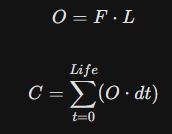
This indicates that obedience (O) is the product of faith (F) and love (L). The resulting character (C) is the summation of this obedience over the duration of the probationary life. The “Big Radar” serves as the continuous monitor of the variable O. If at any point the individual chooses to “sin willfully,” the value of O becomes negative, and the “accumulated sins” begin to outbalance the “record of good deeds” on the heavenly register. The “Investigative Judgment” is the final calculation of the integral, where the “eye of Jesus” scans the total C to see if it bears the “divine similitude”.
| Component | Spiritual Factor | Mechanical Action |
| Input | Faith and Love | Motivates heart obedience. |
| Process | Sanctification over a lifetime | Continual “dying to self”. |
| Monitoring | Divine Omniscience | The “Big Radar” detecting motives. |
| Output | Character in the Judgment | Determination of fitness for heaven. |
| Mission Field | Spiritual Condition | Tactical Approach |
| The Cities | “Gross darkness” and “bondage of evil” | Earnest labor; Christ’s method of ministry. |
| The Youth | “Pressing their way to ruin” in public schools | Denominational schools; separate from the world. |
| The Neighbor | “Straying sons and daughters of Adam” | Sympathy, kindness, and “fireside” Bible study. |
| The Backslider | “Halting between two opinions” | Re-conversion through the “testimony of mercies”. |
For more articles, please go to www.faithfundamentals.blog or our podcast at: https://rss.com/podcasts/the-lamb.
SELF-REFLECTION
How can I, in my personal devotional life, delve deeper into these prophetic truths, allowing them to shape my character and priorities?
How can we adapt these complex themes to be understandable and relevant to diverse audiences, from seasoned church members to new seekers or those from different faith traditions, without compromising theological accuracy?
What are the most common misconceptions about these topics in my community, and how can I gently but effectively correct them using Scripture and the writings of Sr. White?
In what practical ways can our local congregations and individual members become more vibrant beacons of truth and hope, living out the reality of Christ’s soon return and God’s ultimate victory over evil?
If you have a prayer request, please leave it in the comments below. Prayer meetings are held on Tuesday, Wednesday, Friday, and Saturday. To join, enter your email address in the comments section.

 PEOPLE OF THE BOOK